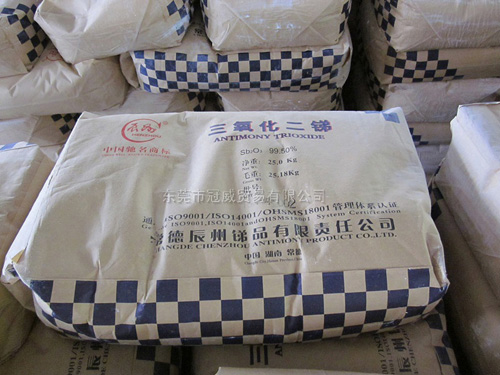
Antimony trioxide, with the chemical formula Sb₂O₃, is a white crystalline powder. It turns yellow when heated and returns to white when cooled. It is odorless and has unique physical and chemical properties. It has a wide range of applications in life, which will be introduced in detail below.
I. Pigment and Coating Field
Antimony trioxide is an excellent inorganic white pigment and plays a significant role in the paint industry. It can provide good covering power and coloring power for the paint, making the paint present a pure and bright white color. In the manufacturing of enamel and ceramic products, antimony trioxide, as a covering agent and brightener, can increase the opacity of the products, making their surfaces smoother and whiter, and enhancing the aesthetic appeal and quality of the products. In the glass industry, it can also replace arsenous acid as a decolorizing agent, effectively removing impurity ions from glass, enhancing the transparency of glass, and making glass products clearer and brighter.
Ii. Flame-retardant materials field
(1) Flame retardancy of polymer materials
Polymer materials such as plastics and rubber are ubiquitous in our lives, but their flammable nature also poses safety risks. Antimony trioxide, as an efficient additive flame retardant, has become the key to solving this problem. It can be used independently or in combination with other flame retardants and smoke suppressants. In plastic products such as PVC, PP, PE, PS, ABS, PU, etc., antimony trioxide can all play an excellent flame-retardant role. For instance, when manufacturing fire-resistant work gloves, flame-retardant electronic product casings, flame-retardant carriages, as well as flame-retardant wires and cables, adding antimony trioxide can significantly enhance the flame-retardant performance of the products, effectively slow down the burning rate, prevent the spread of fire, and provide a guarantee for people's lives and property safety.
(2) Flame Retardant mechanism
The flame retardant mechanism of antimony trioxide is very unique. At the initial stage of combustion, it will first melt and form a protective film on the material surface. This protective film acts like a barrier, isolating air and preventing oxygen from further contact with the material, thereby suppressing the progress of combustion. At high temperatures, antimony trioxide will be vaporized. The vaporized antimony trioxide will dilute the oxygen concentration in the air, making the combustion lack sufficient oxygen support and thus achieving the effect of flame retardancy. Moreover, when antimony trioxide is used in combination with halogen compounds (such as organic compounds containing chlorine and bromine), a good synergistic effect will be produced. They will generate antimony chloride or antimony bromide. These substances can promote the movement of halogens and the formation of carbides in the solid state, and capture free radicals in the gaseous state, significantly enhancing the flame retardant performance.
(3) Surface modification technology enhances performance
However, antimony trioxide, as an inorganic compound, usually has poor compatibility with organic polymers, which can affect their flame retardant effect and also have adverse effects on the processing performance and mechanical properties of polymer products. To solve this problem, scientists adopted surface modification technology. By attaching a layer of long-chain polymer to the surface of antimony trioxide, it can be better combined with the polymer resin. In this way, not only is the addition amount of antimony trioxide in the polymer increased, reducing the production cost, but also its flame-retardant effect can be fully exerted. For instance, mechanical grinding machines like honeycomb mills provide strong support for the surface modification of antimony trioxide. Its working principle of depolymerization first and then drying can simultaneously achieve material grinding, drying, sorting and chemical surface treatment of powder. After being precisely measured, the materials are sent into the hot air system to remove the free water on the surface, and then fully broken up and depolymerized in the mill. The particles after depolymerization and reduction are entangled and combined with the atomized modifier in the air to form a single-layer nano-coating, which greatly enhances the performance of antimony trioxide.
Iii. Catalyst Field
(1) Polyester synthesis
Antimony trioxide is the core catalyst in the synthesis process of polyethylene terephthalate (PET). It promotes the polycondensation reaction between phthalic anhydride and ethylene glycol, increases the molecular weight, and optimizes the mechanical strength and thermal stability of the material. Compared with other catalysts (such as titanium-based ones), antimony trioxide has the advantages of mild reaction conditions and fewer by-products, and is particularly suitable for the production of food-grade PET, ensuring the safety and quality of the products.
(2) Polypropylene polymerization
During the process of propylene monomer polymerization into polypropylene, antimony trioxide, as a catalyst, can increase the polymerization rate and the uniformity of molecular weight distribution, and improve the heat resistance and impact resistance of the material. This makes the polypropylene products produced have higher added value and are widely used in many fields such as automobiles and home appliances.
(3) Other polymerization reactions
In the synthesis of polyurethane (PU) and polyvinyl chloride (PVC), antimony trioxide, as an auxiliary catalyst, works in synergy with metal soaps or organotin stabilizers, which can delay the thermal decomposition of materials and enhance processing stability. This is crucial for scenarios with high flame retardant requirements such as wires and cables, ensuring the safety and reliability of the products during use.
Iv. Other fields
(1) The medical field
Antimony trioxide also has certain applications in the field of medicine. It can be used as one of the ingredients in the formula of certain anti-cancer drugs, participating in the treatment of certain types of cancer and contributing to solving the difficult problem of cancer. At the same time, it can also be used to produce some antibacterial and digestive drugs, helping people resist diseases and maintain good health.
(2) Glass and ceramic additives
In the glass industry, antimony trioxide, as an additive, can enhance the strength and transparency of glass, making glass products more durable, clear and transparent. In the ceramic industry, it can not only serve as an oxidant in glazes, endowing the ceramic surface with better luster and purity, but also act as a white pigment, making ceramic products more elegant and stylish.
(3) Production of optoelectronic products
Antimony trioxide can also be used in the production of photovoltaic products, such as solar cells. In the manufacturing process of solar cells, it plays a unique role, helping to enhance the photoelectric conversion efficiency of the cells and promoting the development and application of clean energy.
(4) Cosmetic formulas
Antimony trioxide also has its place in the cosmetics industry. It can be used as one of the formula ingredients in cosmetics to adjust the comfort of coatings and provide users with a better experience.
Antimony trioxide has a wide range of applications in daily life, covering pigments and coatings, flame-retardant materials, catalysts, and many other fields. With the continuous advancement of technology, it is believed that the application fields of antimony trioxide will continue to expand and deepen, bringing more convenience and surprises to our lives.